Outdated curtains. Infection control gaps. Fire code violations.
Privacy is no longer just about patient comfort — it’s now a critical pillar of compliance, safety, and hospital reputation.
With updated 2026 Joint Commission standards and NFPA 101 fire safety requirements taking full effect, hospitals and VA facilities must rethink how they provide physical separation in care environments. In many cases, the solution isn’t another curtain — it’s a Rolascreen.
Let’s explore the driving factors behind this shift and why retractable privacy screens are the smarter, safer upgrade heading into the 2026 audit cycle.
Curtains Are No Longer Compliant — Or Clean
Privacy curtains once dominated patient spaces. But as infection control and environmental safety standards evolve, fabric-based systems are falling short.
Hospitals sticking with traditional curtains face increasing risks:
- Pathogen spread: Studies show up to 95% of curtains test positive for MRSA/VRE within 7 days
- Cleaning inefficiency: Curtain swaps require 15–20 minutes of labor plus laundry time
- Fire hazard: Plastic curtains like Visqueen no longer meet NFPA 101 standards for temporary barriers
- Auditory privacy failures: Curtains do little to block speech or protect ePHI
In short, they’re not keeping up with what regulators — or patients — now expect.
New Standards Demand Measurable Privacy and Fire Safety
As of 2026, the Joint Commission’s Physical Environment (PE) chapter requires temporary barriers to be “smoke tight” and constructed of noncombustible or limited-combustible materials.
Unrated plastic sheeting or wrinkled curtains? 🚫 No longer acceptable.
Facilities must now prove:
- Fire-rated materials are used for temporary separation
- Reusable equipment is easily disinfected between patients
- Visual and auditory privacy is actively maintained across zones
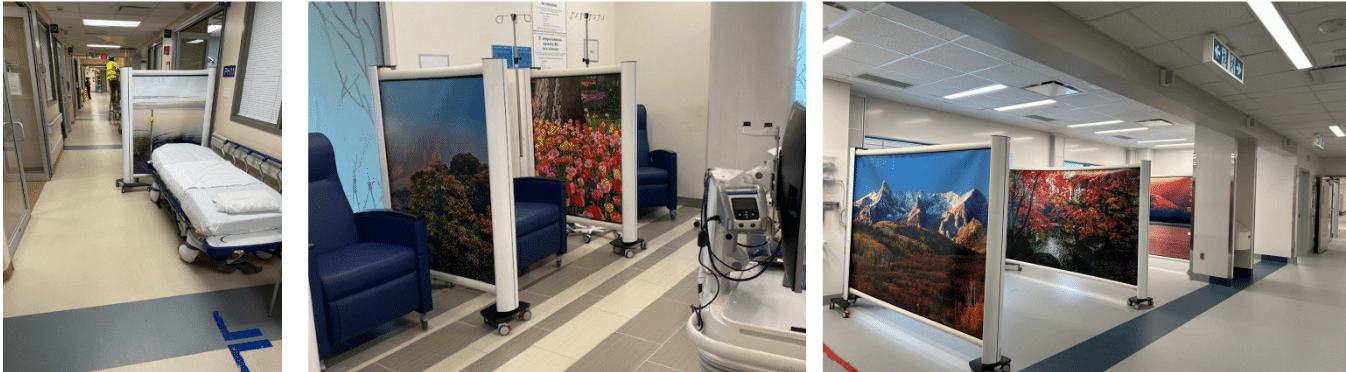
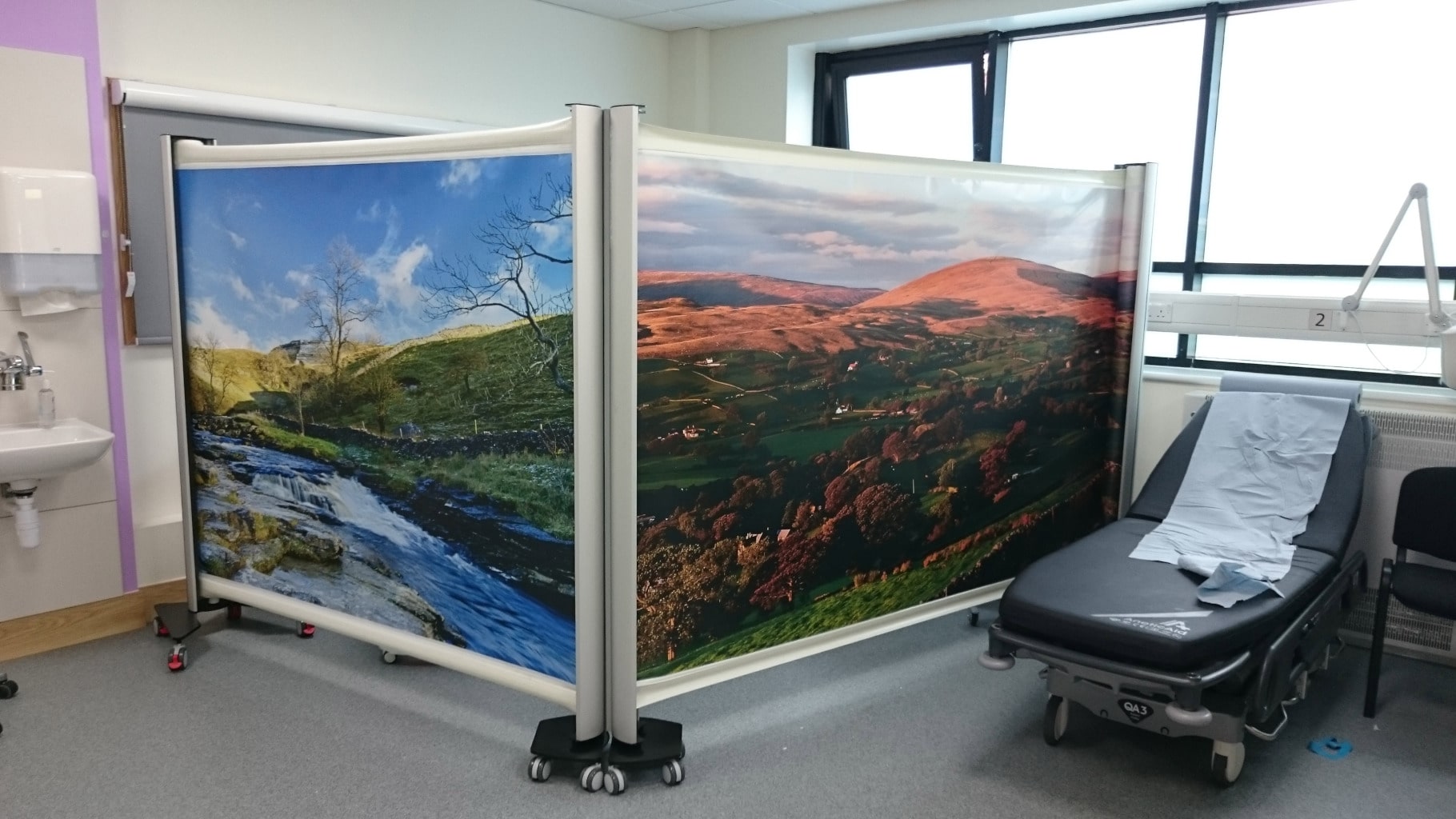
Rolascreen retractable privacy screens meet these expectations head-on, with non-porous, durable materials that are easy to clean and safe to deploy across departments.
How Rolascreen Supports Compliance and Efficiency
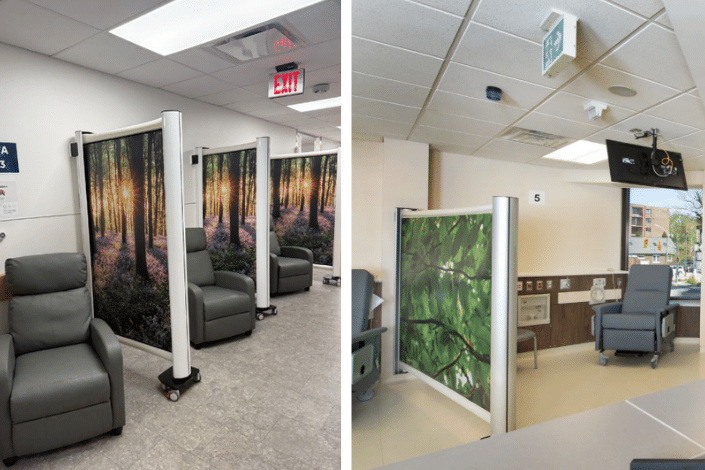
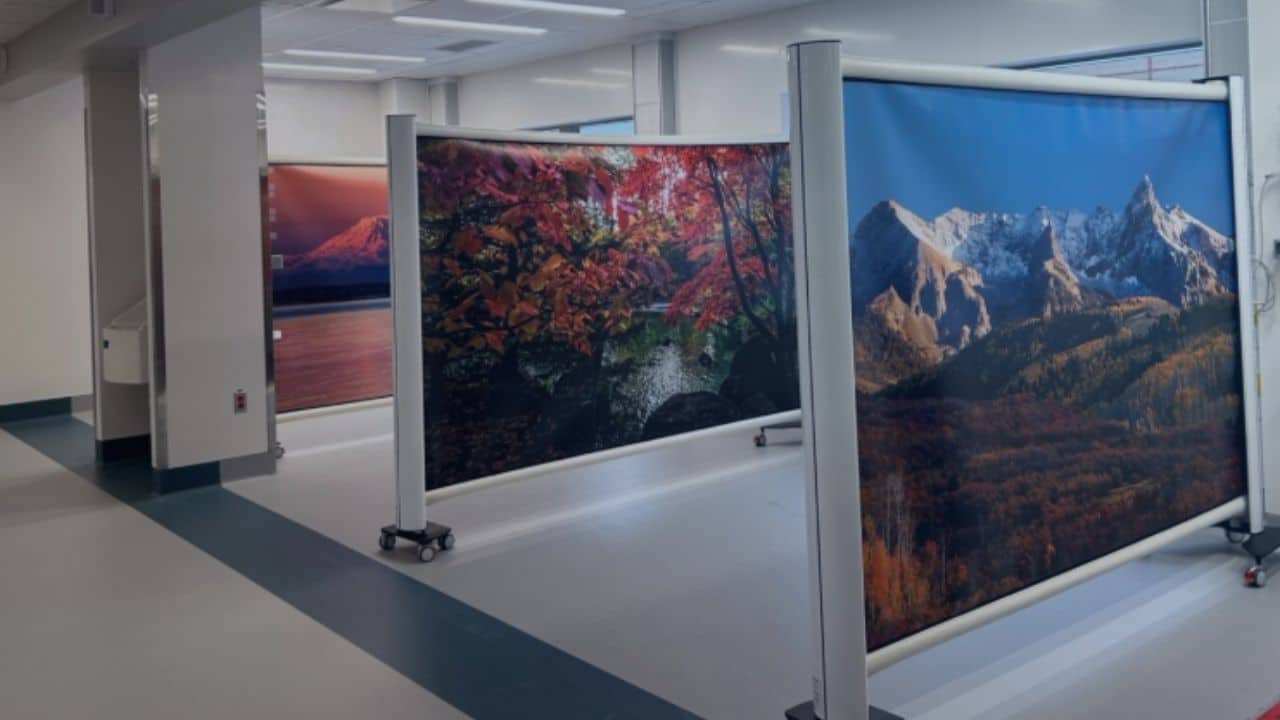
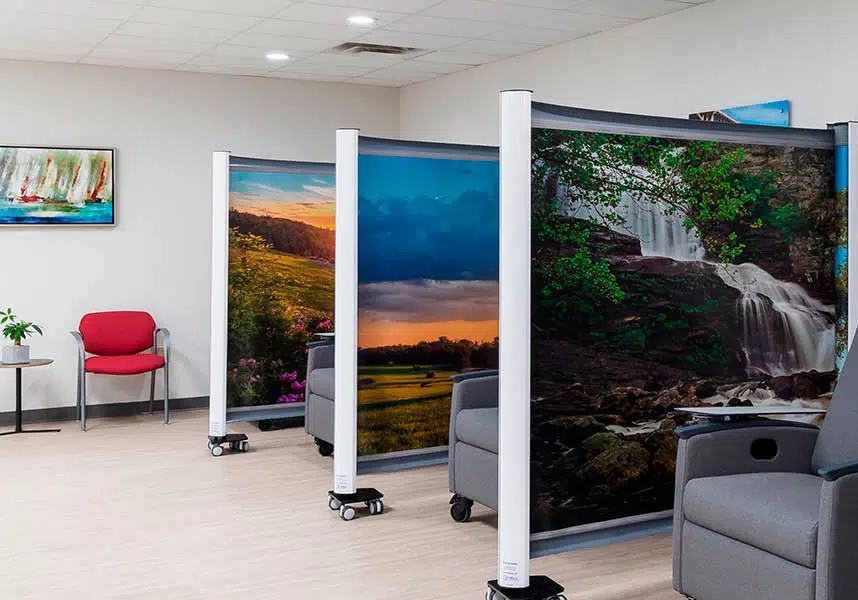
Unlike curtains, Rolascreen retractable dividers are:
- Made of thermally stabilized polyester film used in clinical-grade applications
- Cleanable in seconds using CaviWipes or PDI Sani-Cloth — no linen management
- Smoke tight and NFPA 101-friendly — ideal for survey-readiness
- HIPAA-aligned for visual and auditory privacy in open environments
- Portable or wall-mounted, requiring no construction, drilling, or permits
From triage bays to post-op zones, they create instant separation with zero disruption.
Better Privacy, Better Patient Experience
Patient satisfaction isn’t just anecdotal — it’s measurable.
Poor privacy in shared spaces leads to:
- Lower HCAHPS scores
- Negative online reviews
- Lost trust and perceived unprofessionalism
With Rolascreen, hospitals can provide immediate visual separation that boosts patient confidence while easing pressure on staff.
A Smarter Investment Than Curtains
Curtains may seem cheaper upfront — but the lifecycle costs tell a different story.
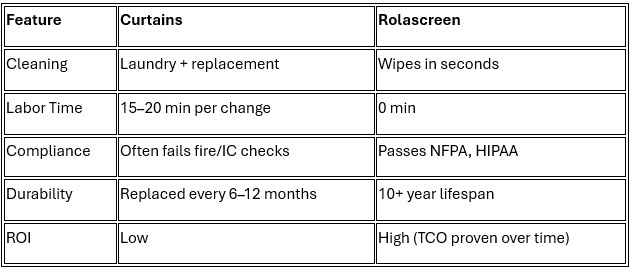
Over a 10-year period, hospitals can save thousands by switching to a cleaner, more durable system.
Final Word: Compliance Is Coming—Are You Ready?
In 2026, regulatory bodies aren’t just checking the boxes—they’re auditing for proof of safe materials, infection control, and patient-centered design.
Rolascreen helps you meet those expectations and elevate your patient environment — all with a simple, mobile solution you can deploy today.
Explore Our Full Line of Privacy Screens for Hospitals & Government Facilities
Internal Link → Rolascreen.com/retractable-privacy-screens
Frequently Asked Questions
Q: Are Rolascreen dividers compliant with 2026 Joint Commission standards?
A: Yes. They meet smoke-tight and cleanable surface requirements defined in the updated PE and IC chapters.
Q: Can these screens be used in federal or VA facilities?
A: Absolutely. Rolascreen is Made in the USA and aligns with Buy America Act preferences, making it ideal for federal procurement.
Q: How do these compare to curtains for infection control?
A: Unlike fabric, Rolascreen’s non-porous surface doesn’t harbor bacteria and can be wiped down instantly—reducing HAI risks significantly.
Q: Are they mobile or fixed?
A: Both. Rolascreen offers portable units and wall-mounted versions depending on your facility layout.
Q: Is installation disruptive?
A: Not at all. Portable units require no setup. Wall-mounted models install cleanly without ceiling modifications or downtime.