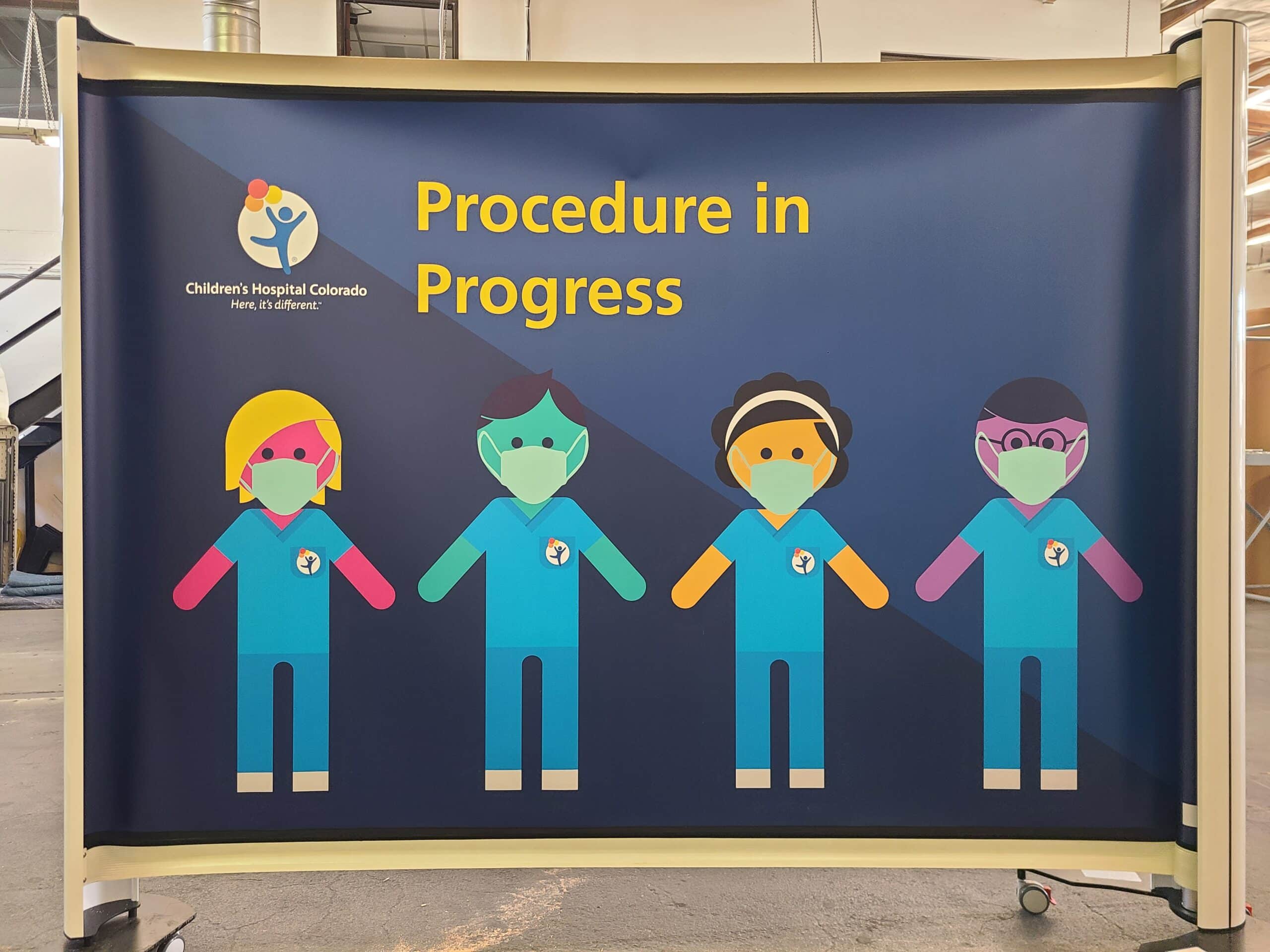
Pediatric Privacy Isn’t Optional—It’s Clinical
In pediatric care, privacy does more than protect dignity—it directly impacts emotional stability, trust, and recovery outcomes for both children and their families.
A child’s hospital visit isn’t just another case on the schedule. It’s an emotional event filled with uncertainty, fear, and sensory overload. Whether it’s a routine procedure or an emergency situation, children enter clinical environments that feel unfamiliar, loud, and often overwhelming.
In these moments, privacy becomes a clinical tool—not a convenience.
Yet in many pediatric settings, privacy is still treated as an afterthought: a thin curtain, a partially drawn divider, or a temporary barrier in a crowded space.
Curtains can blur—but they don’t truly block.
They move—but they don’t protect.
And for pediatric patients, that’s not enough.
What Privacy Looks Like Through a Child’s Eyes
Children experience healthcare environments differently than adults. They are highly sensitive to visual stimuli, sound, and unfamiliar surroundings.
When privacy is compromised, the impact is immediate:
- Increased fear and anxiety
- Reduced trust in care providers
- Disrupted communication between child and caregiver
- Higher stress during procedures
Even something as simple as seeing another patient in distress or overhearing clinical conversations can trigger emotional responses that make care more difficult.
In pediatric environments, privacy is not just about separation—it’s about creating a sense of safety.
Why Curtains Fall Short in Pediatric Care
Traditional hospital curtains were never designed for the complexity of modern pediatric care.
They introduce multiple limitations:
- Minimal acoustic protection from alarms and conversations
- Frequent movement that reduces visual security
- Fabric surfaces that can harbor bacteria and pathogens
- Institutional appearance that increases anxiety
Curtains may create the illusion of privacy—but they rarely provide the level of protection children actually need.
In high-sensitivity environments like pediatric wards, NICUs, and ER overflow areas, these limitations become more than inconvenient—they become clinical risks.
The Infection Control Risk No One Sees
Pediatric patients—especially infants and immunocompromised children—require environments that minimize exposure to harmful pathogens.
Fabric curtains are among the most frequently touched surfaces in healthcare settings, yet they are rarely cleaned between each patient interaction.
This creates hidden risks:
- Pathogens can remain on fabric surfaces for extended periods
- Curtains require removal and laundering, delaying sanitation
- Dust and particles accumulate in curtain headers
- Movement of curtains can disperse contaminants into the air
Hard-surface privacy screens eliminate these risks by allowing immediate disinfection between patients.
This is not just a convenience—it’s a critical step toward safer pediatric care environments.
Supporting Family-Centered Care
In pediatric settings, the patient is never alone—the family is part of the care team.
Privacy plays a key role in supporting that relationship.
When adequate privacy is missing:
- rents hesitate to ask sensitive questions
- Emotional moments are interrupted
- Care conversations feel exposed
- Comfort and reassurance become more difficult
Creating a private, controlled space allows families to communicate openly, support their child, and participate fully in care decisions.
A Better Way to Protect Pediatric Patients
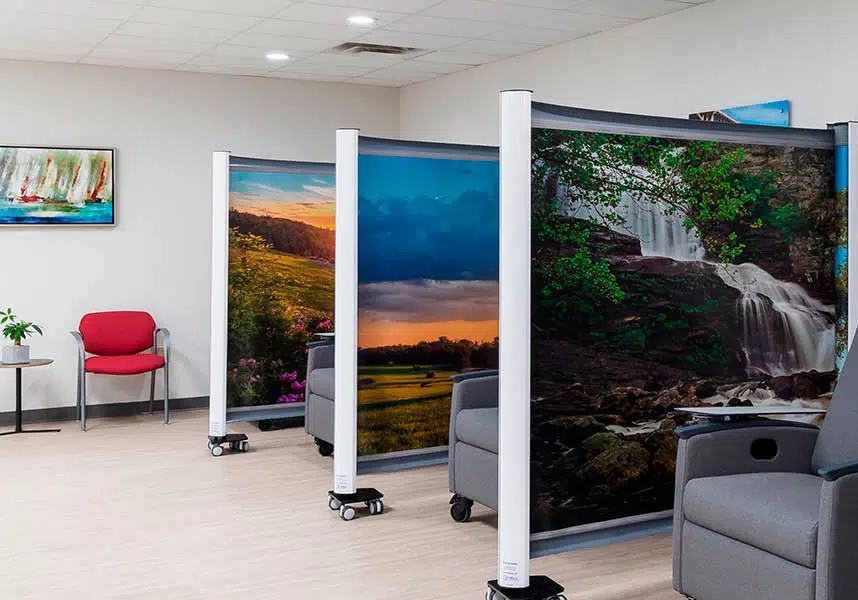
Rolascreen retractable privacy systems are designed to meet the real needs of modern healthcare environments—especially pediatric care.
These systems do more than divide space—they create controlled, adaptable environments.
Key benefits include:
- nstant full-height visual privacy
- Reduced overstimulation from surrounding activity
- Surfaces that can be disinfected immediately
- Flexible positioning for changing care needs
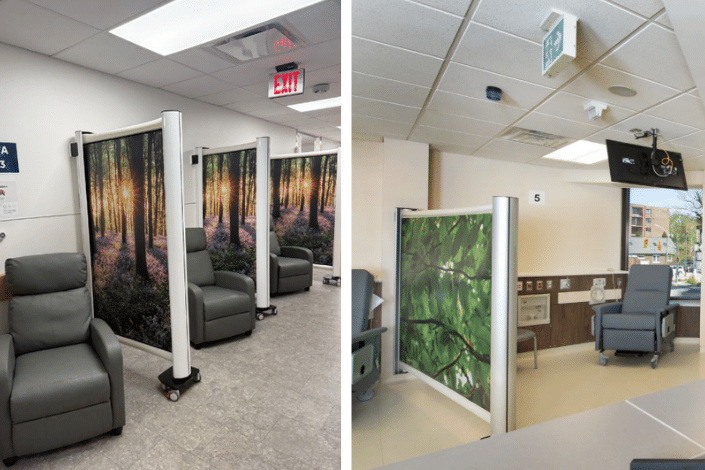
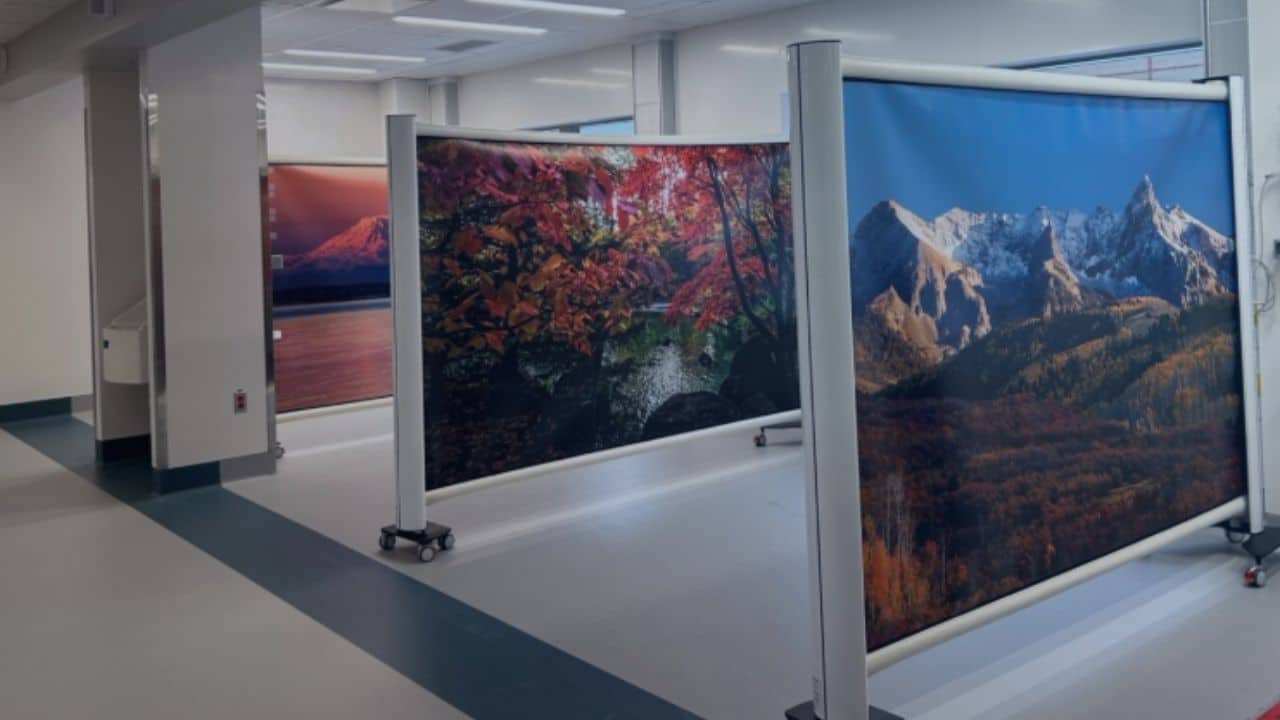
- Customizable graphics for calming, child-friendly environments
Unlike curtains, these are not temporary solutions—they are clinical infrastructure.
Explore how retractable privacy screens improve flexibility and hygiene.
Flexible Privacy for Pediatric and Emergency Settings
Healthcare spaces must adapt quickly—especially during surges, emergencies, or high patient volume.
Rolascreen systems allow teams to:
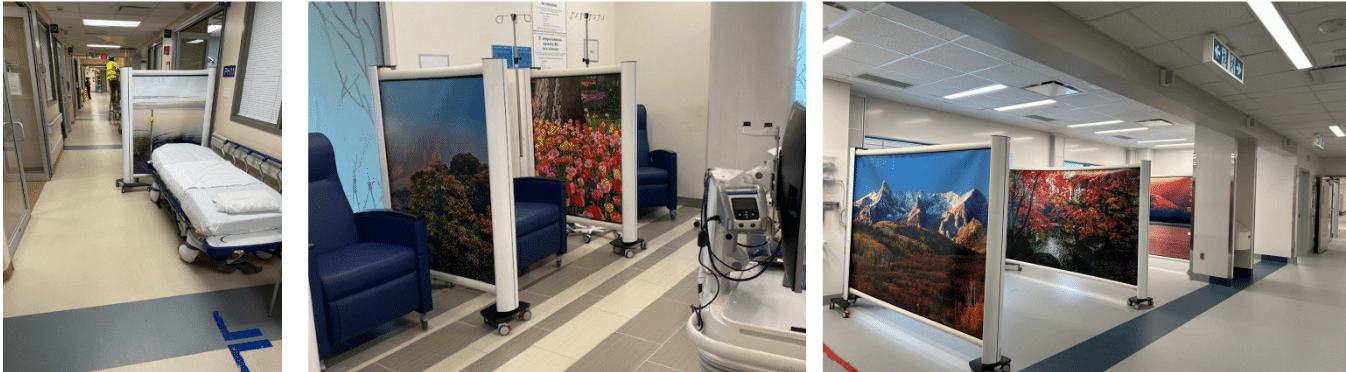
- Create private treatment zones instantly
- Convert shared spaces into functional care areas
- Maintain privacy in hallway or overflow situations
- Improve workflow without construction or delays
- Customizable graphics for calming, child-friendly environments
This flexibility is critical in pediatric environments where both emotional and clinical needs must be addressed simultaneously.
Learn how portable solutions compare to traditional setups.
From Fear to Comfort: The Role of Environment
A child’s experience in a hospital is shaped by more than treatment—it’s shaped by the environment.
Visual distractions, calming imagery, and controlled spaces can significantly reduce stress and improve cooperation during care.
Rolascreen systems support this through:
- Custom graphics (nature scenes, colors, characters)
- Reduced visual exposure to stressful stimuli
- A more welcoming, less institutional environment
When children feel safe, they respond better to care—and that improves outcomes for everyone involved.
Privacy Is Part of the Healing Process
Pediatric care requires more than clinical precision—it requires empathy, trust, and a supportive environment.
Privacy is a critical part of that equation.
By moving beyond outdated curtain systems and adopting modern privacy solutions, healthcare facilities can:
- Improve infection control
- Reduce patient anxiety
- Support family-centered care
- Create more adaptable clinical environments
Rolascreen empowers healthcare teams to deliver care that protects both the patient’s health and their dignity.
Frequently Asked Questions About Pediatric Privacy in Healthcare
Privacy is essential in pediatric care because children are more sensitive to their environment. A lack of privacy can increase anxiety, disrupt trust, and make medical procedures more stressful. Creating a secure, controlled space helps children feel safer and supports better emotional and clinical outcomes.
Hospital curtains provide limited visual separation but offer little acoustic protection and can harbor bacteria. In pediatric environments, where emotional comfort and infection control are critical, curtains often fail to provide adequate privacy or safety.
Retractable privacy screens provide full visual separation, reduce noise exposure, and allow immediate cleaning between patients. They create a more controlled and calming environment, which helps reduce anxiety and improve cooperation during care.
Yes. Hard-surface privacy screens can be disinfected instantly, unlike fabric curtains that require laundering. This reduces the risk of pathogen transmission and supports safer environments for vulnerable pediatric patients.
Absolutely. Privacy screens create a dedicated space where families can communicate openly, comfort their child, and participate in care decisions without feeling exposed or interrupted.