Key Takeaways
- Hospital privacy screens are freestanding or retractable panels — not fabric curtains — with non-porous, wipeable surfaces built for repeated disinfection
- Top manufacturers are evaluated on surface cleanability, infection control suitability, delivery speed, and origin of production
- Rolascreen is the only American manufacturer of retractable medical privacy screens, with products placed in over 900 hospitals and clinics across 47 states
- Domestic manufacturing means faster lead times, direct support, and simpler compliance documentation for U.S. facilities
- Surface material compatibility with hospital-grade disinfectants is the single most critical procurement criterion — not price
What Are Hospital Privacy Screens and Why Do They Matter?
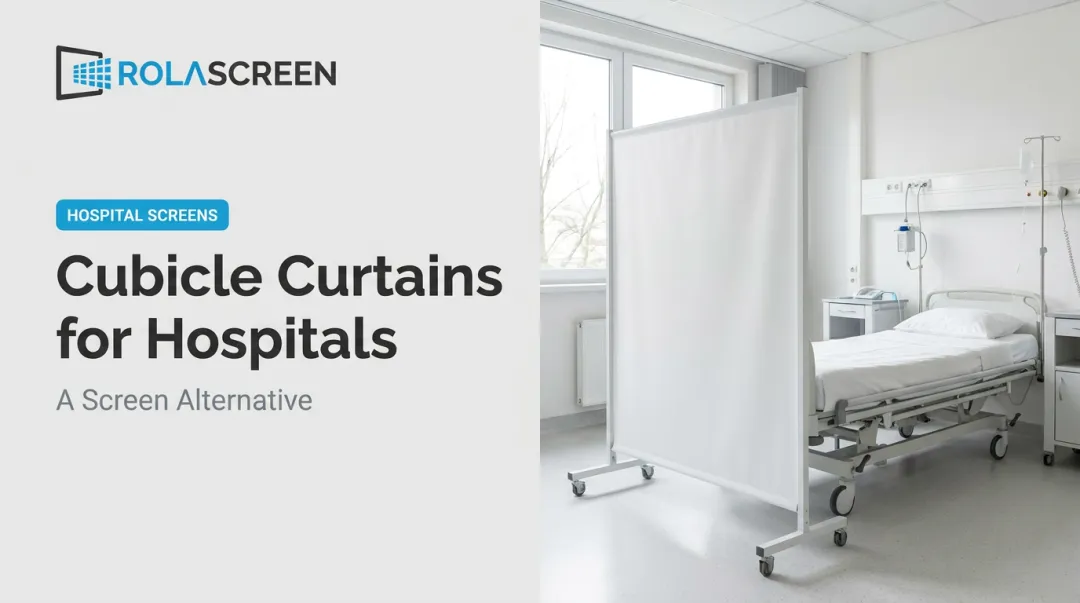
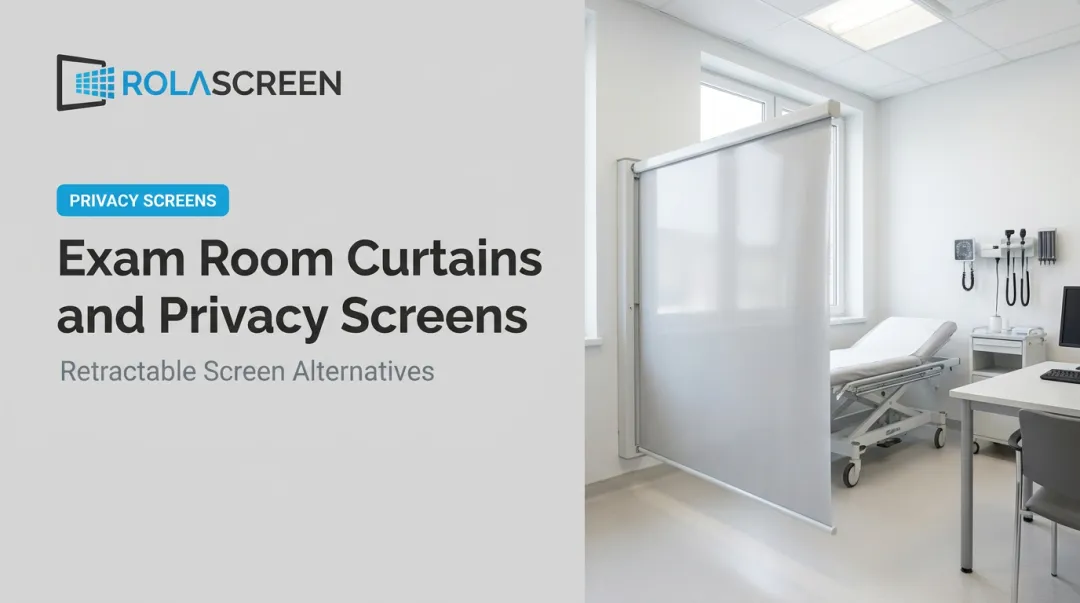
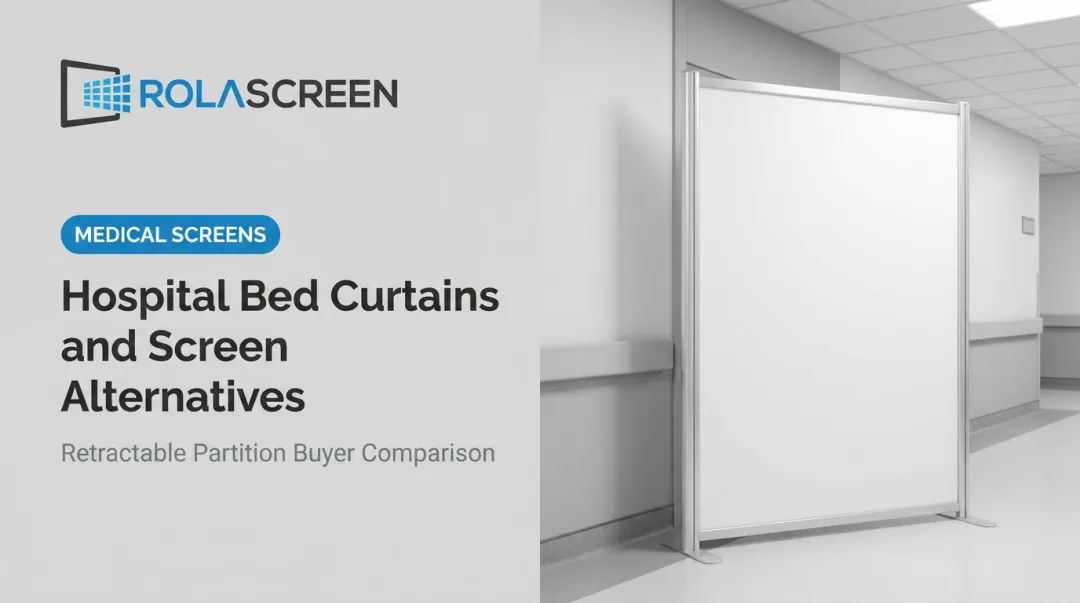
Hospital privacy screens are freestanding, retractable, or portable panels used in clinical settings to divide patient bays, create temporary exam areas, and maintain HIPAA-compliant visual barriers. They are not digital bedside monitors — and they're entirely separate from ceiling-track fabric curtains.
These screens serve three core functions in healthcare:
- Patient dignity — creating private spaces for exams, procedures, and sensitive conversations in shared areas
- Infection control — physically separating patients in multi-bed rooms or open ED bays
- Space management — enabling rapid reconfiguration without construction or permanent structural changes
HHS guidance under HIPAA specifically cites "cubicles, dividers, shields, curtains, or similar barriers" as reasonable physical safeguards for incidental disclosures, meaning portable screens qualify as a recognized compliance tool in open-plan environments.
Why Wipeable Surfaces Have Become the Clinical Standard
The shift away from fabric curtains toward hard-surface, wipeable screens is driven by documented contamination data. A 2012 study published in AJIC sampled 43 curtains across 30 hospital rooms and found 41 of 43 (95%) were contaminated, including 21% with MRSA and 42% with VRE. A separate burns-ward study found 87.5% of freshly laundered curtains tested positive for MRSA within 14 days.
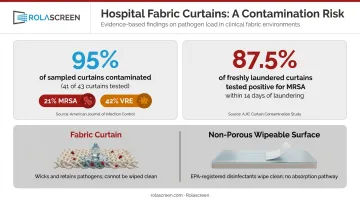
Non-porous, wipe-clean screens eliminate the wicking mechanism that makes fabric curtains a persistent contamination source. Fluids stay on the surface where EPA-registered disinfectants can neutralize them. No removal, laundering, or reinstallation required.
Top Hospital Privacy Screen Manufacturers
Manufacturers below were evaluated on product design and material quality, infection control suitability, domestic versus foreign production, customization capability, delivery reliability, and healthcare client base.
Rolascreen
Founded: 2012 (as Kwickscreen USA); rebranded as Rolascreen in 2019 Headquarters: Chatsworth, CA (manufacturing since 2019) Healthcare presence: 900+ hospitals, clinics, and schools across 47 U.S. states
Rolascreen is the only American manufacturer of retractable medical privacy screens. The founding team spent seven years distributing foreign-made screens before identifying the gaps that drove them to build domestically: foreign products couldn't keep pace with evolving U.S. infection control standards, and overseas supply chains created persistent support limitations.
The inner panels use thermally stabilized, non-porous polyester film — the same material category used in blood glucose test strips. The surface has no fiber matrix or weave gaps, which means pathogens can't embed within the structure.
The film is compatible with all major EPA-registered hospital disinfectants, including sodium hypochlorite (bleach), quaternary ammonium compounds, and accelerated hydrogen peroxide, without degradation or warping across thousands of cleaning cycles.
Major clients include Kaiser Permanente, UCSF, UCLA, NYC Health + Hospitals, Atrium Health, Ascension, UPMC, and VA facilities. Over 2,000 screens have shipped with zero reported shipping damage, achieved through purpose-engineered foam packaging with specialized compartments for each component.
| Specification | Detail |
|---|---|
| Design Type | Retractable and portable; can flex at any point along width |
| Material | Thermally stabilized, non-porous medical-grade polyester film |
| Disinfectant Compatibility | Bleach, quaternary ammonium compounds, accelerated hydrogen peroxide |
| Customization | Full branding, logo printing, custom artwork, CAD/SolidWorks capabilities |
| Lead Times | 10–30 days (non-printed); 3–6 weeks (custom-branded); expedited available |
| Origin | Made in USA (Chatsworth, CA) |
KwickScreen
Founded: UK-based originator of the retractable privacy screen category Headquarters: 30 Engate Street, London SE13, United Kingdom
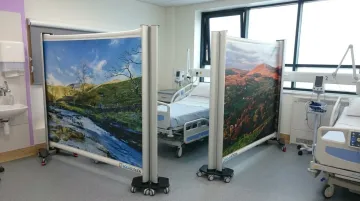
KwickScreen is where the retractable screen concept began. Rolascreen's founders distributed KwickScreen products between 2012 and 2019 before transitioning to domestic manufacturing. The product uses a retractable banner-style design on a wheeled base, with single and double-sided configurations.
The Duo V3 panel uses a polyester-film inner panel with aluminum and steel structural components. Documented disinfectant compatibility includes quaternary compounds, bleach at 1,000–10,000 ppm, 60% alcohol, and hydrogen peroxide. Standard lead times are published at 4–6 weeks, with no U.S.-specific guaranteed window published.
KwickScreen maintains U.S. market support channels, though no verified U.S. physical office was identified. For U.S. buyers, longer lead times and no domestic manufacturing oversight are real drawbacks worth factoring into procurement decisions.
| Specification | Detail |
|---|---|
| Design Type | Retractable single/double-sided banner screen on wheeled base |
| Material | Polyester film panel; aluminum spine; steel base |
| Disinfectant Compatibility | Quats, bleach (1,000–10,000 ppm), 60% alcohol, hydrogen peroxide |
| Customization | Printed graphics available |
| Lead Times | 4–6 weeks standard; no U.S.-specific expedited window published |
| Origin | United Kingdom |
Silentia
Founded: Falkenberg, Sweden U.S. Office: King of Prussia, PA (1004 W. 9th Ave., +1 267 457 4477)
Silentia manufactures soft-panel privacy screens positioned around acoustic and visual privacy in ward and consultation settings. The 2024 distributor brochure identifies polycarbonate as the panel material. Official cleaning instructions specify weekly cleaning with ethanol or common surface cleaners, while prohibiting abrasive cleaners, steam, and dishwasher use.
The brand does maintain a direct U.S. office, which improves support access compared to purely overseas suppliers. However, the primary design focus is European clinical environments, and no NRC or acoustic performance specification was located in official product documentation.
| Specification | Detail |
|---|---|
| Design Type | Wall-mounted and freestanding soft-panel screens |
| Material | Polycarbonate panels with smooth wipe-clean surfaces |
| Disinfectant Compatibility | Ethanol and common surface cleaners; prohibits abrasives and steam |
| Customization | Color and configuration options; verify U.S. availability |
| Lead Times | Confirm with U.S. office directly |
| Origin | Sweden (U.S. office in King of Prussia, PA) |
Versare Solutions
Headquarters: Minneapolis, Minnesota Designation: Made in USA
Versare manufactures portable folding panel dividers, accordion partitions, and clear polycarbonate barriers, with a healthcare-specific product page targeting hospitals, clinics, and overflow areas. The company is genuinely U.S.-based with domestic production.
Surface compatibility varies by panel material. Versare's documented guidance permits mild soap or diluted bleach (1/3 cup per gallon) on polycarbonate, but warns against ammonia and concentrated bleach. Fabric and SoundSorb panels are limited to mild water-based soap — incompatible with hospital-grade disinfectant protocols. Procurement teams should verify compatibility by specific panel type before purchase.
| Specification | Detail |
|---|---|
| Design Type | Folding panel and accordion-style portable room dividers |
| Material | Varies by panel: polycarbonate, fabric, SoundSorb |
| Disinfectant Compatibility | Diluted bleach on polycarbonate only; fabric panels not compatible |
| Customization | Panel color and size configurations |
| Lead Times | Confirm with manufacturer |
| Origin | Made in USA (Minneapolis, MN) |
Screenflex
Headquarters: Lake Zurich, Illinois (assembled in Minneapolis, MN per FAQ)
Screenflex serves schools, gyms, churches, and some healthcare environments with freestanding folding panel dividers on casters. The dedicated Healthflex Privacy Screen – Vinyl line targets healthcare buyers with vinyl and polycarbonate finishes described as smooth, nonporous, and wipe-clean. The Healthflex line lists an acoustic rating up to NRC 0.30.
Screenflex's FAQ specifies mild water-based soap for vinyl cleaning. No manufacturer documentation was found confirming compatibility with bleach, quaternary ammonium compounds, or other hospital-grade disinfectants. Healthcare buyers should request written disinfectant compatibility data before procuring for clinical environments.
| Specification | Detail |
|---|---|
| Design Type | Freestanding folding panel dividers on casters |
| Material | Vinyl and polycarbonate options |
| Disinfectant Compatibility | Mild soap confirmed; hospital-grade disinfectant compatibility not documented |
| Customization | Height, width, and color options |
| Lead Times | Confirm with manufacturer |
| Origin | Designed in Lake Zurich, IL; assembled in Minneapolis, MN |
How We Chose the Best Hospital Screen Manufacturers
Evaluation Criteria
Manufacturers were assessed on how well their products serve real clinical needs — not brand recognition alone:
- Surface cleanability — withstands repeated hospital-grade disinfection, including bleach and quaternary ammonium compounds
- Infection control suitability — clinical or peer-reviewed evidence supports use in patient-facing environments
- Domestic manufacturing — U.S. production enables faster delivery, direct warranty support, and cleaner regulatory alignment
- Customization capability — configurable for specific facility layouts or branding requirements
- Proven healthcare client base — actual hospitals and health systems, not just general commercial accounts
Common Procurement Mistakes to Avoid
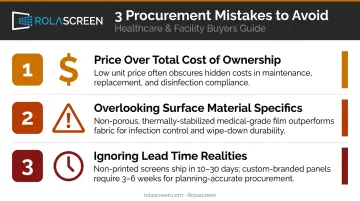
Healthcare procurement teams frequently make three errors when selecting a screen manufacturer:
- Prioritizing unit price over total cost of ownership — a screen that can't be properly disinfected or needs frequent replacement costs more long-term
- Overlooking surface material specifics — "wipeable" on a product page doesn't guarantee bleach or quat compatibility; always request written documentation
- Ignoring lead time realities — foreign manufacturers typically quote 4–6 weeks or longer; during surge scenarios or facility expansions, that gap matters
For U.S. federal or VA facilities, the Buy American statute (FAR Subpart 25.1) imposes domestic content requirements on covered acquisitions. Sourcing from a U.S. manufacturer simplifies that compliance documentation considerably.
Conclusion
The best hospital privacy screen manufacturer isn't simply the one with the lowest unit price or the widest brand recognition. It's the one whose materials, manufacturing standards, delivery capabilities, and post-sale support align with the clinical realities of the facility doing the purchasing.
Before finalizing a supplier, procurement teams and facility managers should evaluate:
- Infection control compliance — wipeable surfaces and compatibility with EPA-registered hospital disinfectants
- Reconfiguration flexibility — how easily screens adapt to changing patient volumes and care settings
- Scalability — whether the supplier can support consistent delivery across multiple locations or facilities
For U.S. healthcare facilities that need screens manufactured domestically, delivered on a defined timeline, and backed by direct manufacturer support, Rolascreen has served over 900 hospitals, clinics, and schools across 47 states. Contact the team at 1-800-259-4214 or sales@rolascreen.com to discuss your facility's needs.
Frequently Asked Questions
What is the difference between a hospital privacy screen and a hospital curtain?
Hospital curtains are fabric panels hung from ceiling-mounted tracks. Privacy screens are freestanding or retractable panels with non-porous, wipeable surfaces. Screens can be repositioned without ceiling infrastructure, disinfected between patients in minutes, and don't trap pathogens the way fabric does.
Are hospital privacy screens HIPAA compliant?
Portable and retractable screens can serve as physical safeguards under HIPAA's incidental disclosure provisions, which HHS explicitly recognizes. Compliance depends on proper deployment — the screen must actually prevent unauthorized viewing during consultations or procedures.
How do hospital privacy screens help with infection control?
Non-porous screen surfaces can be wiped down with hospital-grade disinfectants between patients, eliminating the bacterial reservoir problem documented in fabric curtains. There's no laundering cycle, no reinstallation delay, and no window of contamination between patient uses.
How quickly can hospital privacy screens be delivered after ordering?
Lead times vary significantly by manufacturer. Rolascreen fulfills non-printed orders in 10–30 days and offers expedited options; foreign manufacturers typically quote 4–6 weeks or longer, which can create real delays during urgent deployments.
Can hospital privacy screens be customized with a facility's branding or artwork?
Yes. Manufacturers like Rolascreen offer custom printing of logos, facility artwork, wayfinding graphics, and calming imagery directly on screen panels. These options support patient experience goals while maintaining full privacy function.
What should procurement managers look for when buying hospital privacy screens?
Four criteria matter most:
- Surface material: confirms compatibility with your facility's specific disinfectant protocols
- Portability: ease of reconfiguration as care areas change
- Domestic vs. foreign manufacturing: directly affects warranty coverage and support responsiveness
- Total cost of ownership: lifecycle value, not just unit price